Bibliography

Bibliography:

Ableton.com. (2018). Converting Audio to MIDI — Ableton Reference Manual Version 10 | Ableton. [online] Available at: https://www.ableton.com/en/manual/converting-audio-to-midi/ [Accessed 22 Feb. 2019].

All Black – Jungle Fever, (1994). [TV programme] 2: BBC.

Barr, T. (2017). Goldie. [online] Metalheadz. Available at: https://www.metalheadz.co.uk/artist/goldie. %5BAccessed 30/01/2019]

Bartlett, B. (2017). Practical recording techniques. 1st ed. New York: Routledge.

Christodoulou, C. (2009). Renegade Hardware – Speed, Pleasure and Cultural Practice in Drum ‘n’ Bass Music. Ph.D. London South Bank University.

Ed Rush & Optical – Out Of The Box. (2004). [DVD] Ed Rush, Optical. London: Resist Music.

Gooch, J. (2015). FEED ME / SPOR | Bass Resampling | FL Studio | Razer Music. [online] YouTube. Available at: https://www.youtube.com/watch?v=YaWOVCeytWA. [Accessed 30/01/2019]

Hesmondhalgh, D and Melville, C (2002) Urban Breakbeat Culture – Repercussions of Hip-Hop in the United Kingdom. In: Mitchell, T, (ed.) Global Noise: Rap and Hip Hop Outside the USA. Wesleyan Univ Pr , ? – ? (336). ISBN 9780819565020

Hockman, J. (2014). An ethnographic and technological study of breakbeats in hardcore, jungle and drum & bass. Montreal: McGill University.

Huber, D. and Runstein, R. (2018). Modern recording techniques. New York: Routledge.

Miller, Paul D. Aka. DJ Spooky That Subliminal Kid. (2008). Sound unbound. Cambridge, Mass.: MIT Press.

Milton, S. and Kennard, W. (2018). RTRN II JUNGLE – Documentary. [online] YouTube. Available at: https://www.youtube.com/watch?v=YXxtY0ZMvlE. %5BAccessed 05/02/2019]

Morey, J. (2017). A Study Of Sampling Practice In British Dance Music, 1987-2012. Leeds Beckett University.

Morey, J. and McIntyre, P. (2014). The Creative Studio Practice of Contemporary Dance Music Sampling Composers. Dancecult, 6(1).

Robjohns, H. (2003). Recording Drums. [online] Soundonsound.com. Available at: https://www.soundonsound.com/techniques/recording-drums. %5BAccessed 26/01/2019]

Said, A. (2015). Art of Sampling, The: The Sampling Tradition of Hip Hop/Rap. 2nd ed. Brooklyn, New York: Superchamp Books.

Schloss, J. and Chang, J. (2014). Making beats. Middletown, CT: Wesleyan University Press.

Final Feedback

Prior to the submission I asked Justin for further feedback before I made my final mix and submitted the tracks. Using the advice given I added more musical variation to all the tracks, and layered the drum breaks with additional kick and snare samples to add more punch to them. In the jungle track I had a less harsh EQ applied to the snare as it had a quite aggressive scooped sound to it beforehand. Following this I mixed them using reference tracks relevant to the genre of each song.

Feedback Meeting

Following the first feedback meeting with my tutor, I made the necessary changes to my tracks, most notably was to add width to the drums, as they were very mono in comparison to the rest of the tracks, which had quite a bit of width and panning on them. I also removed a lot of mid range frequencies from the drums in “In The Jungle”, to give them a more scooped and harsh sound that is more in keeping with the style of Jungle music.

Composing the tracks

With all of the samples created, I was able to start composing the songs. Using Ableton Live’s “cut to midi” feature I was able to put a drum sample into a sampler, with each transient being assigned to a different note. Using this I was able to programme new drum breaks in the style of Jungle, Techstep and 2 more modern drum and bass tracks.

The midi information for the drum break used in “In The Jungle”, with pitch automation on the snares.

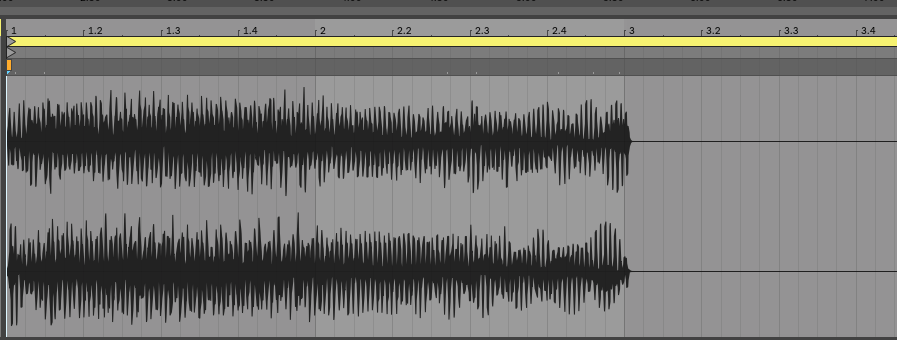
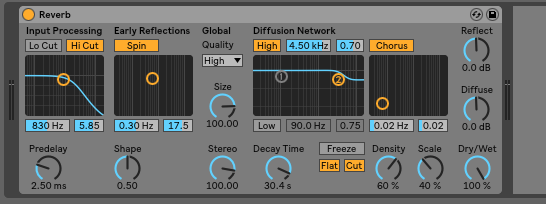
In the track “Step-Tech”, I created a pad sound by putting a reverb on a bass sample, recording this to audio and then I sampled the tail on the reverb in Ableton’s sampler and looped it to create a sampler patch.

The bass sample the reverb was applied to.
The reverb applied to the sample.
The sampler patch used for the pad.

Further Sound Design

This sound design was similar to that of modern drum and bass. Quite simple operator FM patches were used, and then automated filter movements were used to create sounds that were then heavily distorted to give heavy, gritty bass samples. The patch was a slightly modified sine wave being modulated by another slightly modified sine wave at 2 coarse. The filter was a resonant MS2 filter with the filter drive turned up. These samples can be heard in the track “Dark Feel”.

The Operator patch and distortion plugin.
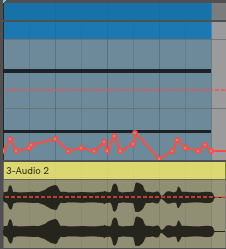
The filter automation is visible, with the sample recorded below.

Complex Sound Design

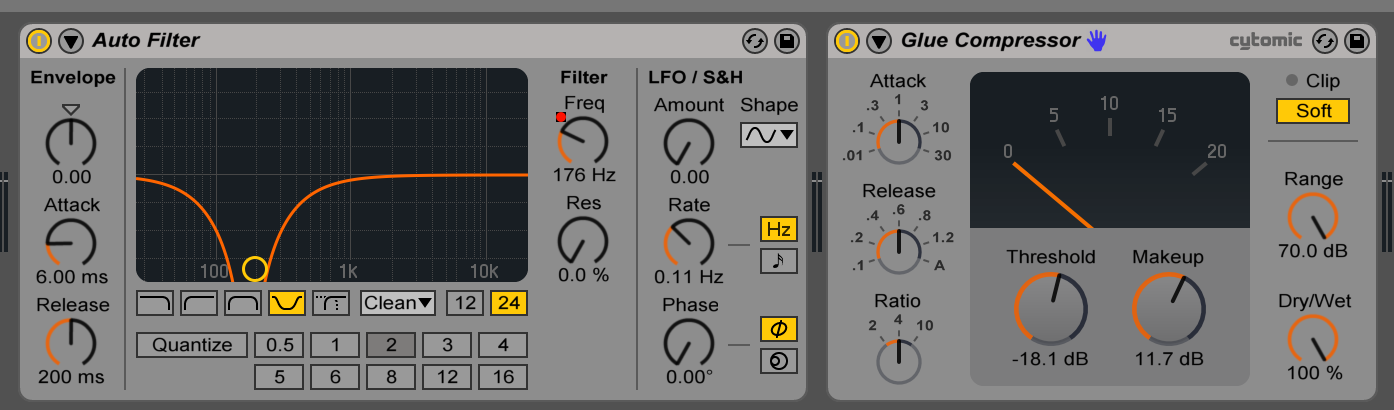
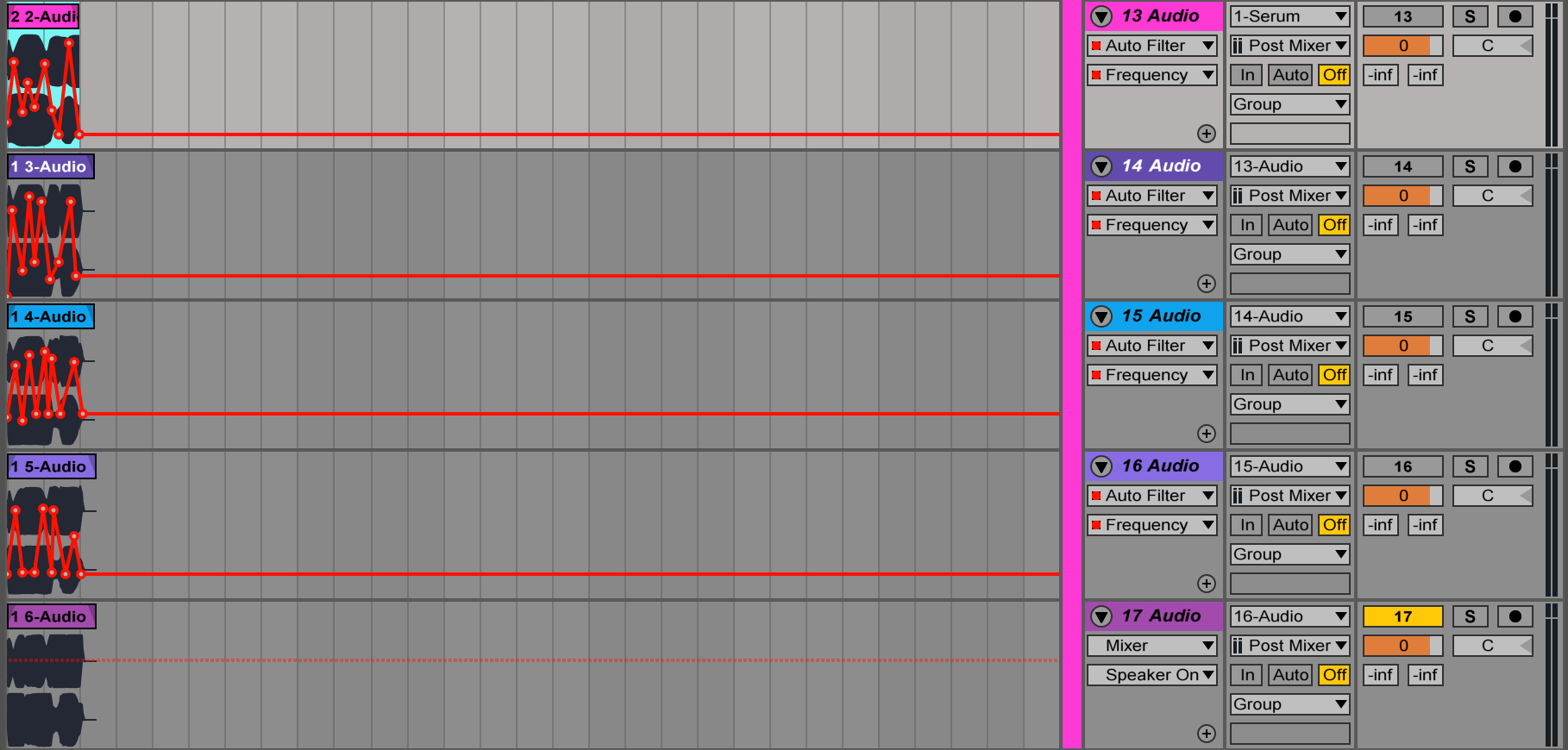
For the more complex sound design I applied heavy compression to sine waves to turn them into square waves. To achieve the sine compression sound design, I resampled a simple sine wave. Using glue compressors soft clipping feature to add more harmonics, and then removing frequencies with an automated band pass filter to create movement. Following this I recorded it to audio and by repeating the compression and filtering until a near square wave sound had been achieved I was able to create a lot of movement in the bass (Gooch, 2015). These samples can be heard throughout “Step-Tech”, making up the main section of the bassline.

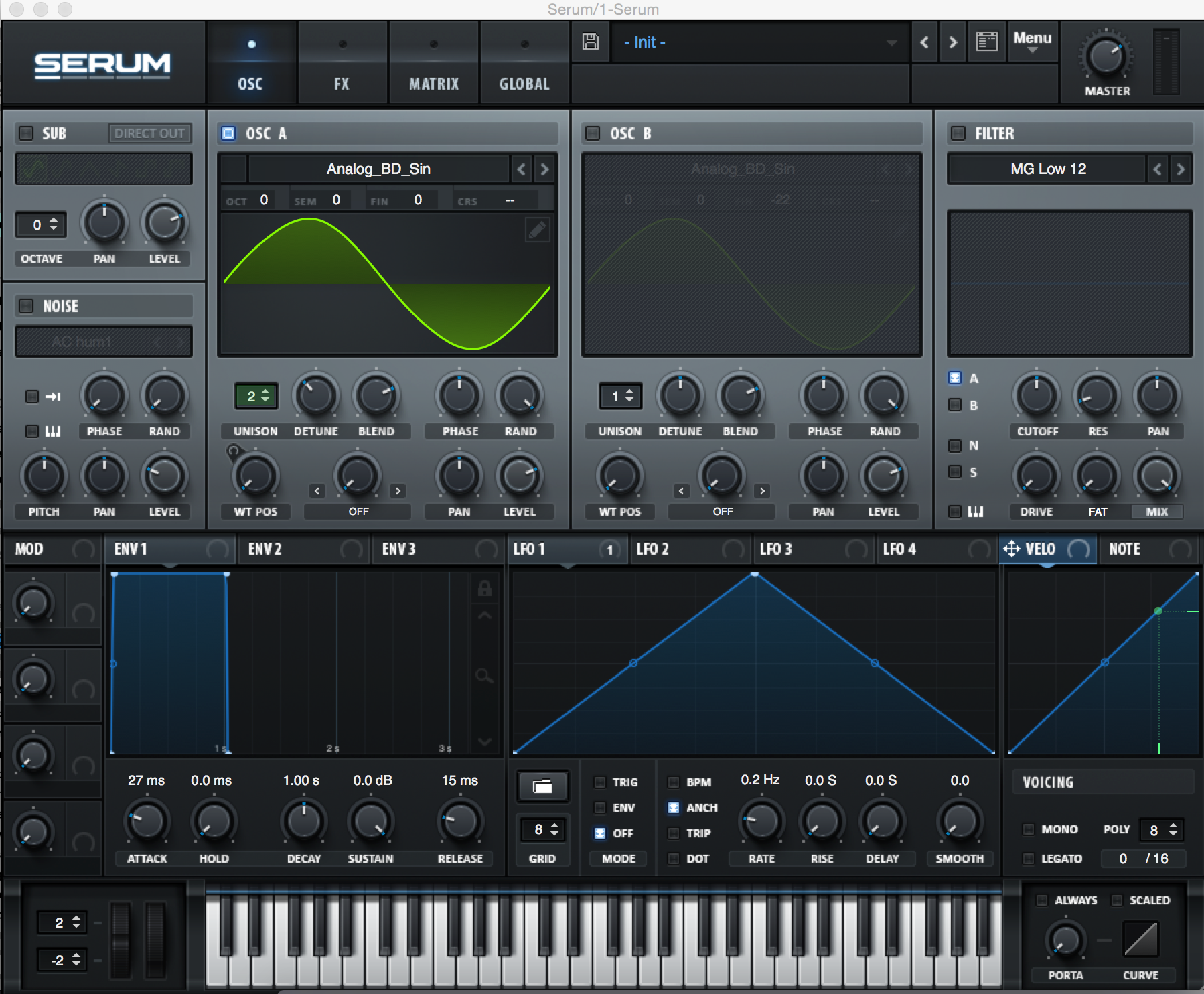
The serum pitch used for the original sine wave sample.
2 Compressed Sine waves in Unison.
The filter and glue compressor on the sine wave channel.
Multiple layers of resampling, with the filter movement automation visible.
The final sample following resampling (repeated 4 times).

Basic Sound Design

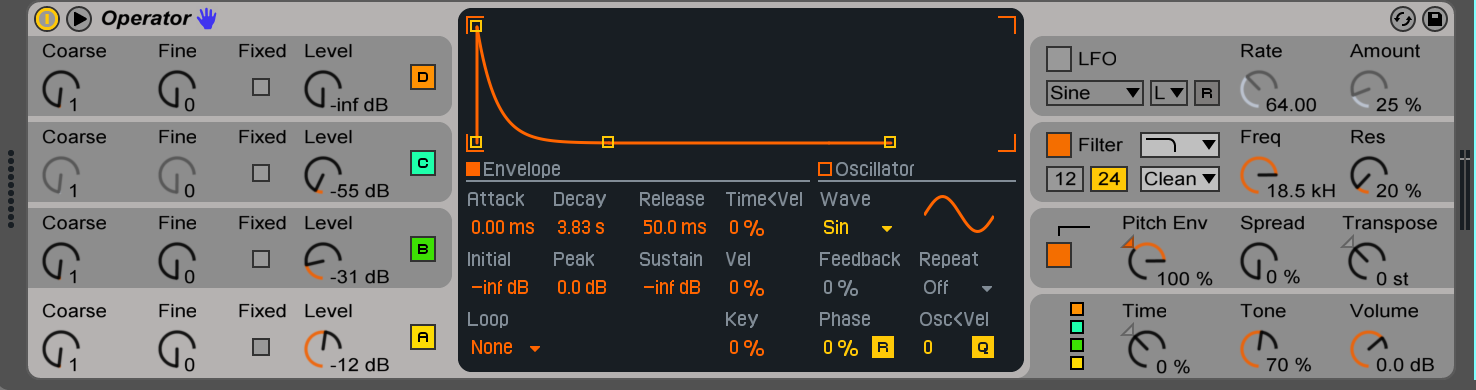
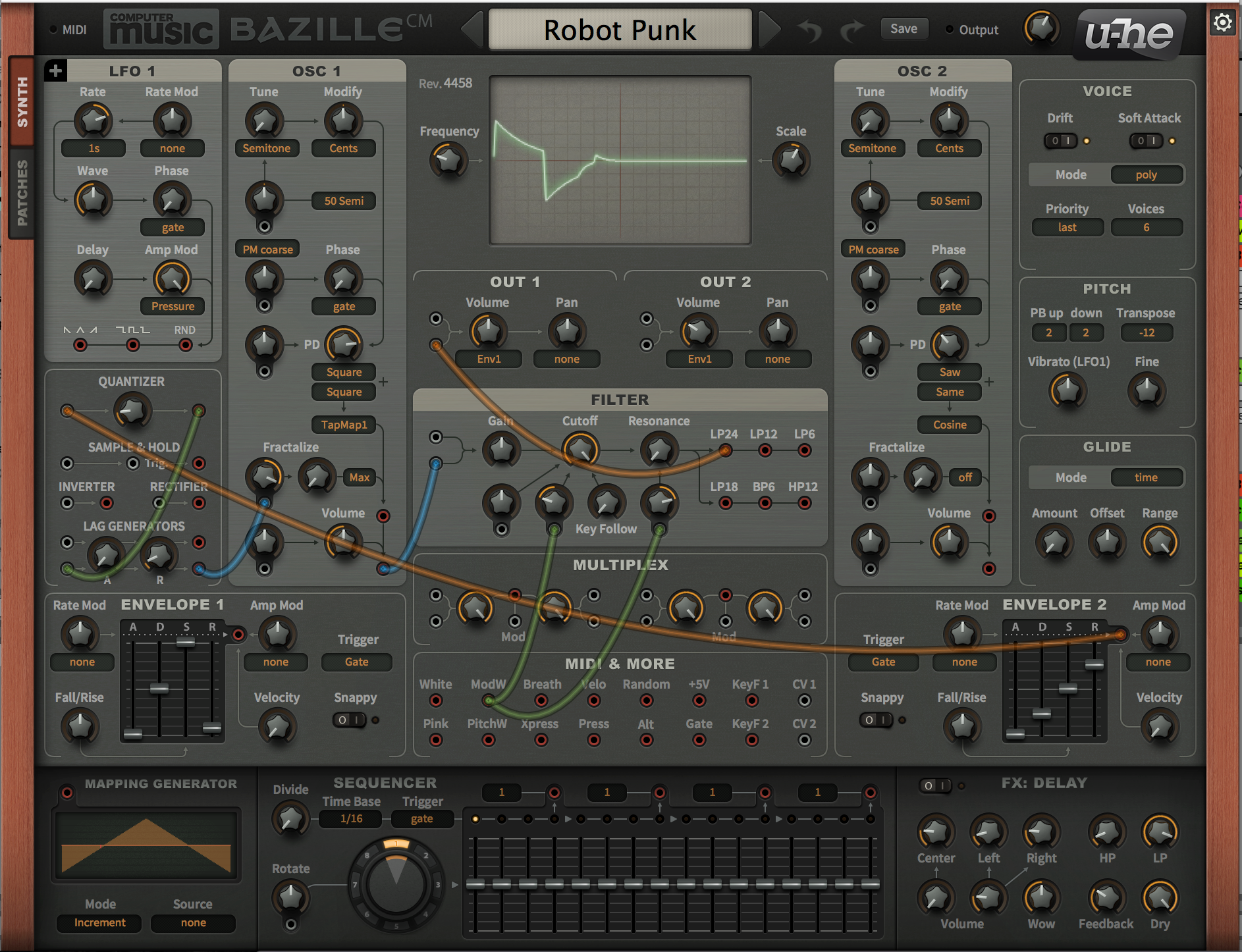
Focussing on simple FM and Additive synthesis, these samples were made quite easily mainly using Operator and Bazille. Some of the early sound design has been used in “In The Jungle” and “Step-Tech”, most notably the 808 kick for the bassline in “In The Jungle” and the Techno style stabs in “Step-Tech” track.

This is the simple Operator patch for the 808 Kick
This shows the Techno style pluck within Bazille

Drum Recording

The drums were recorded using a fairly minimal setup, a single kick drum microphone, 2 snare mics, one on the top and one on the bottom and then a pair of overhead microphone to pick up the overall kit. This microphone setup is similar to that used in Jazz and Funk recordings, allowing recordings to be made in the style of those sampled by drum and bass producers (the recordings were made at 130 and 140 bpm to be as true to Jazz and Funk recordings as possible) (Huber and Runstein, 2018). A single microphone technique was also used but the recordings weren’t as high quality as the 5 microphone setup due to a lot of ringing being picked up from the tom drums so they were abandoned. There were also Hi hat and Ride microphones that were unused as they did not fit within the style of recording.